Leitura editorial
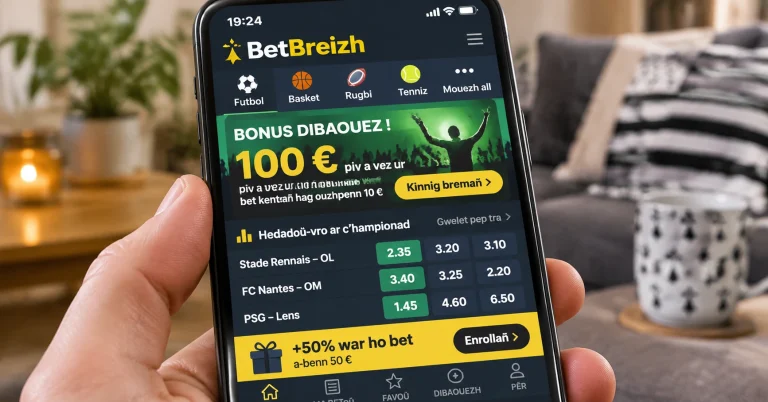
Bonuz hep depozit kêr : penañ da gounit ha kreskiñ ho poent
Bonuz hep depozit kêr : penañ da gounit ha kreskiñ ho poent Danvez Petra eo ar bonuz hep depozit kêr? Penaos e labour an doare-se…
Ler artigo ↗
In slots, the first impression rarely misleads. The theme grabs attention, the mechanics guide it, and the rules set clear limits on what appears on screen. At uzzo, reading starts from these three points to observe games more calmly, without promising results and without treating every slot as if it were the same.
If the game art catches your attention, it is worth looking beyond it. A slot may seem light, dense, classic, or full of special features, but the real experience usually depends on the combination of symbols, pace, and reading the instructions.

Some slots rely on familiar symbols. Others use denser settings, strong visual trails, or a presentation that feels almost like an invitation to explore the details. The point is not to decide by the visuals alone. The point is to notice what the game suggests and what it actually organizes behind the appearance.
A good habit is to separate three layers. First, the theme. Then, the mechanics. Finally, the rules. This approach helps compare similar games without mixing impression with how they work.
Before starting, it is worth looking at the interface calmly and identifying where the information is that really changes how the game is read. In many slots, the visuals draw more attention than the useful elements, so it is important to locate the paytable, lines, special symbols, and indication of extra features. Reading these points before the spin reduces the chance of interpreting loose signals as if they guaranteed a result. The screen usually tells a story, but its function is also to show rules, limits, and the logic that organizes each round.
Another practical point is noticing how the slot presents its payout structure. Some games highlight combinations in fixed lines, while others work with different ways of hitting, which changes how each round is followed. When the player understands where the prize is calculated and which symbols play a central role, the reading becomes more objective. This avoids confusing animation with real advantage and helps show whether the game depends more on visual sequence, specific features, or traditional combinations.
It also makes a difference to observe whether the slot brings mechanics that change the pace, such as extra rounds, expanding symbols, or elements that build up over the session. Even without getting into numbers, these features change the sense of progress and can influence how the game is followed. The ideal is to understand the role of each function before starting, because a feature that seems simple can reorganize the whole screen dynamic and change what is worth following closely.
The prior reading becomes clearer when the theme is separated from the operation. A game with a strong aesthetic may suggest adventure, luxury, or fantasy, but that does not say how it behaves. For this reason, observing the presentation without getting stuck on style alone helps avoid choices driven by impulse. The theme serves as a reference for atmosphere; the mechanics, as a guide to how it works. When these two layers are treated separately, the analysis of the slot becomes more precise and less noisy.
Another useful point is checking the clarity of the internal instructions. Good slots usually organize the information so the player quickly finds what is needed, without relying on assumptions. If the explanation of the features is confusing, the experience tends to become harder to follow. Reading carefully before the spin helps reveal whether the game offers intuitive navigation or requires more patience to understand the logic of the screens and symbols.
In the end, this initial reading serves to create a simple habit: entering the game knowing where to look. Instead of relying on the first impression, the player starts to observe structure, function, and presentation as different parts of the same experience. This does not remove the need for attention during the session, but it improves the basis for decision-making. Before the spin, understanding what the screen shows is already a way to play with more awareness and less haste.
There are games where the reading is straightforward. The reels behave in a classic way, the symbols have a clear function, and the session follows a more familiar flow. In others, cascades, multipliers, extra spins, special symbols, or variations come in and change the cadence of each round.
This difference matters because it changes the adult player’s expectation. Those who prefer something more stable usually pay attention to one type of slot. Those who like swings and features that appear at specific moments tend to look at another set of signals.
On uzzo, the comparison is not meant to create a ranking. It serves to describe different scenarios more precisely.

Not every slot calls for the same reading. Instead of looking for a single formula, it makes more sense to observe what each game highlights most strongly. These four points usually help separate a quick choice from a better-thought-out one.
The theme can be light, intense, urban, fantastical, or classic. The first clue is there.
Some slots stay stable. Others change often and require more attention to the pace.
Extra rounds, multipliers, and special symbols change how what is happening is read.
When the rule is read calmly, the session becomes less confusing and easier to compare.

Two slots can share the same aesthetic and still deliver very different experiences. One may rely on a simple structure and quick reading. Another may bring a fuller sequence of events, with features that appear at specific moments and change the mood of the session.
For this reason, uzzo’s editorial comparison looks at what can be seen and read in the game itself. Theme, mechanics, and rules form a more honest basis than any ready-made phrase about advantage or outcome.
It is also worth asking: does the game speak better to those who like direct sessions or to those who prefer to follow changes in each round? That question usually organizes the choice more clearly.
The table below summarizes useful differences without inventing numbers, rates, or promises. It works as a reading map for those who want to understand how slots behave in different scenarios.
| Criterion | More straightforward slot | Slot with more variations |
|---|---|---|
| Theme | Familiar visuals, immediate reading, and stable mood. | More marked setting, with details that call for attention. |
| Mechanics | Simple flow, easy-to-follow structure. | Extra features, pace changes, and more layers of action. |
| Rules | Fewer reading points, a shorter path to understanding the game. | More instructions, more elements to check before the session. |
| Reading profile | A good choice for those who prefer clarity and continuity. | A good choice for those who like to follow changes and special features. |
Editorial reading starts with simple questions. Does the theme help explain the concept? Does the mechanic visibly change the pace? Are the rules clear enough to guide comparison? When those answers appear, the game stops being just about appearance and becomes something to read with more judgment.
This kind of approach is useful because it respects real differences between electronic games. There is no single way to play, nor a single way to observe slots. There is room for short sessions, more straightforward games, and experiences with more features. What changes is the way they are read.
If the interest is to go deeper, the next step is usually to look at responsible gaming and the other areas of the portal that cover online casino, electronic games, and rule reading.

The questions below help organize the reading of slots without mixing theme with how they work. They are simple questions, but useful for those who want to compare games more calmly.
Those who compare slots carefully usually gain clarity before making any decision. The path is simple: look at the theme, understand the mechanics, and check the rules. When these three points speak to each other, the game becomes easier to read and less subject to a rushed impression.
Leituras complementares com contexto e critérios.